Allied defense capital is getting an operating system

Australia's sovereign industrial stack and the DSRB are being built in parallel. The allied defense capital landscape is changing — here's what that means for how capital deploys into the sector.

Allied defense capital is getting an operating system

Australia's sovereign industrial stack and the DSRB are being built in parallel. The allied defense capital landscape is changing — here's what that means for how capital deploys into the sector.

Australia recently released the 10th edition of its Defence Exports Catalogue, covering 365 Australian businesses across the sovereign industrial base. Read alongside the ongoing build-out of the Defence, Security and Resilience Bank, it's a useful window into the institutional and capital architecture forming around allied defense — and what it means for how capital gets deployed into the sector.

What Australia has put in place

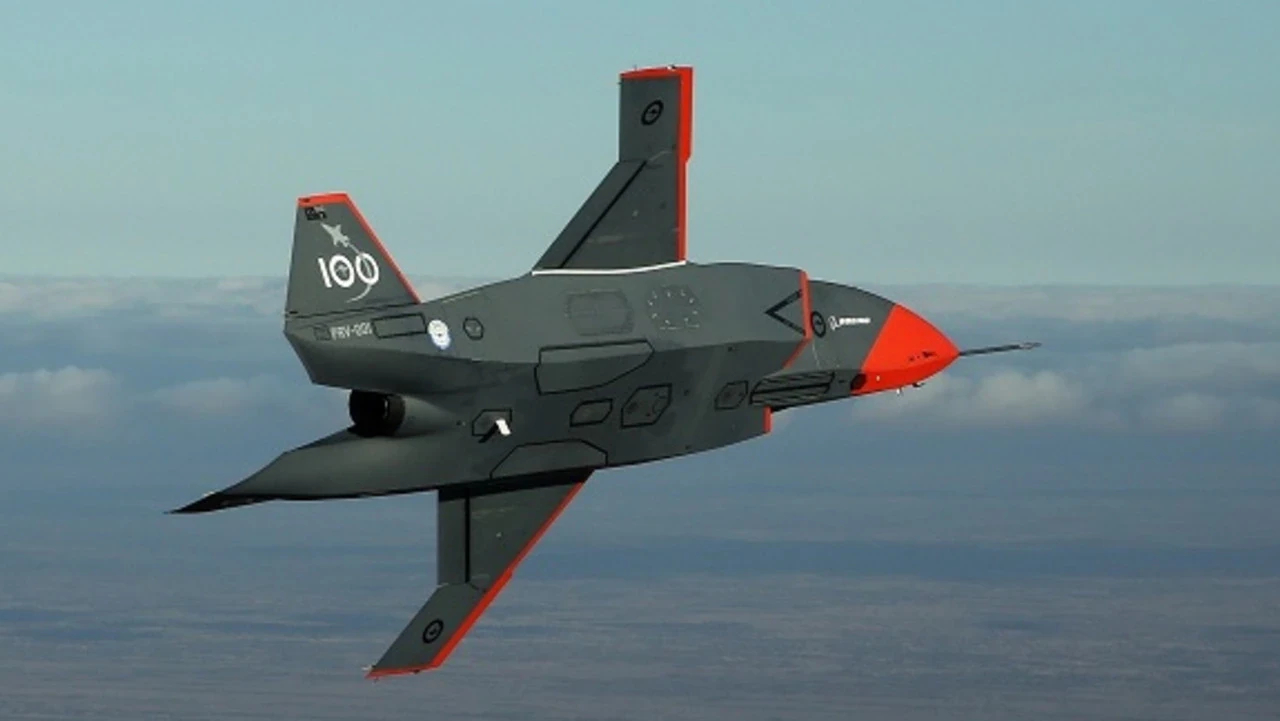
The catalogue isn't a brochure. It's the most visible output of an industrial policy stack that has been assembled quickly over the past two years. The Australian Defence Strategic Sales Office, announced in March 2025, is a joint government-industry platform that supersedes the older Australian Defence Export Office and coordinates the sale of priority Australian capabilities — the MQ-28 Ghost Bat, Bushmaster and Hawkei protected mobility vehicles, the Jindalee Operational Radar Network, and the AS9 Huntsman, Redback and Boxer among them — to allied partners. It's explicitly modeled on a US-style sovereign sales approach.

Sitting behind it is the US$3 billion Defence Export Facility, administered by Export Finance Australia on the National Interest Account. The facility provides loans, bonds and guarantees for defense and dual-use exporters, and it can underwrite transactions too large or too long-dated for Export Finance Australia's standard commercial balance sheet.

Both sit inside a broader framework: the 2024 Defence Industry Development Strategy identified seven Sovereign Defence Industrial Priorities — aircraft maintenance and upgrades, continuous naval shipbuilding, the combined-arms land system, domestic manufacture of guided weapons and munitions, autonomous systems, battlespace awareness, and test and evaluation. These are the areas where Australia has decided it needs domestic capability regardless of what the commercial market would otherwise deliver. The AUKUS Submarine Industry Strategy, released in March 2025, runs parallel and is actively integrating Australian suppliers into UK and US submarine supply chains.

None of this is marketing. It's plumbing. And the plumbing matters because it changes what Australian dual-use companies can credibly offer to investors and to primes.

The parallel capital story

The second piece of the architecture is further from home but more consequential for capital allocators. The Defence, Security and Resilience Bank is a multilateral institution currently in its development phase, targeted for launch by the end of 2026. Its CEO, Rob Murray, was NATO's first Head of Innovation and the architect of both the NATO Innovation Fund and DIANA. The bank is designed to be nation-state owned, not-for-profit, and to issue AAA-rated bonds to finance allied defense capability. In September 2025, ING, JPMorgan and several other major financial institutions signed on as institutional backers. Up to 40 member countries are expected, with 12 anchor countries being finalized.

What matters here isn't the governance architecture — it's the design intent. The bank is being built around three functions: affordable long-term capital for governments making defense acquisitions, procurement financing that supports faster and smarter buying decisions, and guarantees that enable commercial banks to lend to defense and security firms across the supply chain. That third function is not incidental. It's an explicit attempt to close the offtake-risk gap that has historically kept institutional capital out of defense.

How it connects to the scaling problem

The Stanford Gordian Knot Center's recent paper on defense tech's "two valleys of death" framed the scaling problem at the company level — the gap between R&D and production, and the gap between production and durable revenue. We wrote about it here.

What the Australian stack and DSRB together represent is the beginning of analogous institutional infrastructure at the state and offtake layer. Companies still need to cross their individual valleys. Nothing a multilateral bank or a national export facility does changes the fundamental difficulty of scaling hardware or winning durable defense contracts. But the structural uncertainty on the demand side — whether there's going to be a buyer, whether governments can afford what they want to buy, whether offtake contracts will hold through political cycles — is precisely what these institutions are being designed to address.

What it means for capital

Three implications are worth noting for how capital deploys into the sector.

The allied industrial base is increasingly investable as a category, not just as a US story. Australian dual-use companies are being formally organized — via the ADSSO, via the AUKUS submarine program, via Team Defence Australia — into pipelines that plug into US and UK primes. That creates cross-border investment opportunities in a sector that has historically been national.

Offtake certainty mechanisms are starting to exist at scale. A national export facility that can write US$3 billion against a sovereign balance sheet, combined with a multilateral that can guarantee commercial defense lending, changes the risk profile of supply-chain investments that previously looked uninvestable.

Institutional infrastructure takes time to ship, but the funds that pay attention early tend to be positioned when it does. The DSRB targets end-of-2026 launch. The ADSSO's priority capability list will expand. Capital deploying into defense in 2027 will be working inside a different landscape than capital deployed in 2023.

The operating system is being written now. That's worth watching.

Australia recently released the 10th edition of its Defence Exports Catalogue, covering 365 Australian businesses across the sovereign industrial base. Read alongside the ongoing build-out of the Defence, Security and Resilience Bank, it's a useful window into the institutional and capital architecture forming around allied defense — and what it means for how capital gets deployed into the sector.

What Australia has put in place

The catalogue isn't a brochure. It's the most visible output of an industrial policy stack that has been assembled quickly over the past two years. The Australian Defence Strategic Sales Office, announced in March 2025, is a joint government-industry platform that supersedes the older Australian Defence Export Office and coordinates the sale of priority Australian capabilities — the MQ-28 Ghost Bat, Bushmaster and Hawkei protected mobility vehicles, the Jindalee Operational Radar Network, and the AS9 Huntsman, Redback and Boxer among them — to allied partners. It's explicitly modeled on a US-style sovereign sales approach.

Sitting behind it is the US$3 billion Defence Export Facility, administered by Export Finance Australia on the National Interest Account. The facility provides loans, bonds and guarantees for defense and dual-use exporters, and it can underwrite transactions too large or too long-dated for Export Finance Australia's standard commercial balance sheet.

Both sit inside a broader framework: the 2024 Defence Industry Development Strategy identified seven Sovereign Defence Industrial Priorities — aircraft maintenance and upgrades, continuous naval shipbuilding, the combined-arms land system, domestic manufacture of guided weapons and munitions, autonomous systems, battlespace awareness, and test and evaluation. These are the areas where Australia has decided it needs domestic capability regardless of what the commercial market would otherwise deliver. The AUKUS Submarine Industry Strategy, released in March 2025, runs parallel and is actively integrating Australian suppliers into UK and US submarine supply chains.

None of this is marketing. It's plumbing. And the plumbing matters because it changes what Australian dual-use companies can credibly offer to investors and to primes.

The parallel capital story

The second piece of the architecture is further from home but more consequential for capital allocators. The Defence, Security and Resilience Bank is a multilateral institution currently in its development phase, targeted for launch by the end of 2026. Its CEO, Rob Murray, was NATO's first Head of Innovation and the architect of both the NATO Innovation Fund and DIANA. The bank is designed to be nation-state owned, not-for-profit, and to issue AAA-rated bonds to finance allied defense capability. In September 2025, ING, JPMorgan and several other major financial institutions signed on as institutional backers. Up to 40 member countries are expected, with 12 anchor countries being finalized.

What matters here isn't the governance architecture — it's the design intent. The bank is being built around three functions: affordable long-term capital for governments making defense acquisitions, procurement financing that supports faster and smarter buying decisions, and guarantees that enable commercial banks to lend to defense and security firms across the supply chain. That third function is not incidental. It's an explicit attempt to close the offtake-risk gap that has historically kept institutional capital out of defense.

How it connects to the scaling problem

The Stanford Gordian Knot Center's recent paper on defense tech's "two valleys of death" framed the scaling problem at the company level — the gap between R&D and production, and the gap between production and durable revenue. We wrote about it here.

What the Australian stack and DSRB together represent is the beginning of analogous institutional infrastructure at the state and offtake layer. Companies still need to cross their individual valleys. Nothing a multilateral bank or a national export facility does changes the fundamental difficulty of scaling hardware or winning durable defense contracts. But the structural uncertainty on the demand side — whether there's going to be a buyer, whether governments can afford what they want to buy, whether offtake contracts will hold through political cycles — is precisely what these institutions are being designed to address.

What it means for capital

Three implications are worth noting for how capital deploys into the sector.

The allied industrial base is increasingly investable as a category, not just as a US story. Australian dual-use companies are being formally organized — via the ADSSO, via the AUKUS submarine program, via Team Defence Australia — into pipelines that plug into US and UK primes. That creates cross-border investment opportunities in a sector that has historically been national.

Offtake certainty mechanisms are starting to exist at scale. A national export facility that can write US$3 billion against a sovereign balance sheet, combined with a multilateral that can guarantee commercial defense lending, changes the risk profile of supply-chain investments that previously looked uninvestable.

Institutional infrastructure takes time to ship, but the funds that pay attention early tend to be positioned when it does. The DSRB targets end-of-2026 launch. The ADSSO's priority capability list will expand. Capital deploying into defense in 2027 will be working inside a different landscape than capital deployed in 2023.

The operating system is being written now. That's worth watching.

Let’s bring your vision to life

Extreme close-up black and white photograph of a human eye

Contact us

Let’s bring your vision to life

Extreme close-up black and white photograph of a human eye

Contact us

Let’s bring your vision to life

Extreme close-up black and white photograph of a human eye

Contact us