What CCA's first procurement line tells us about Valley Two

CCA was the textbook Valley Two case. The FY27 budget request — $996.5M in procurement, with the Netherlands as the first allied co-buyer — is what crossing it looks like. And what investors should look for in identifying the next ones.

What CCA's first procurement line tells us about Valley Two

CCA was the textbook Valley Two case. The FY27 budget request — $996.5M in procurement, with the Netherlands as the first allied co-buyer — is what crossing it looks like. And what investors should look for in identifying the next ones.

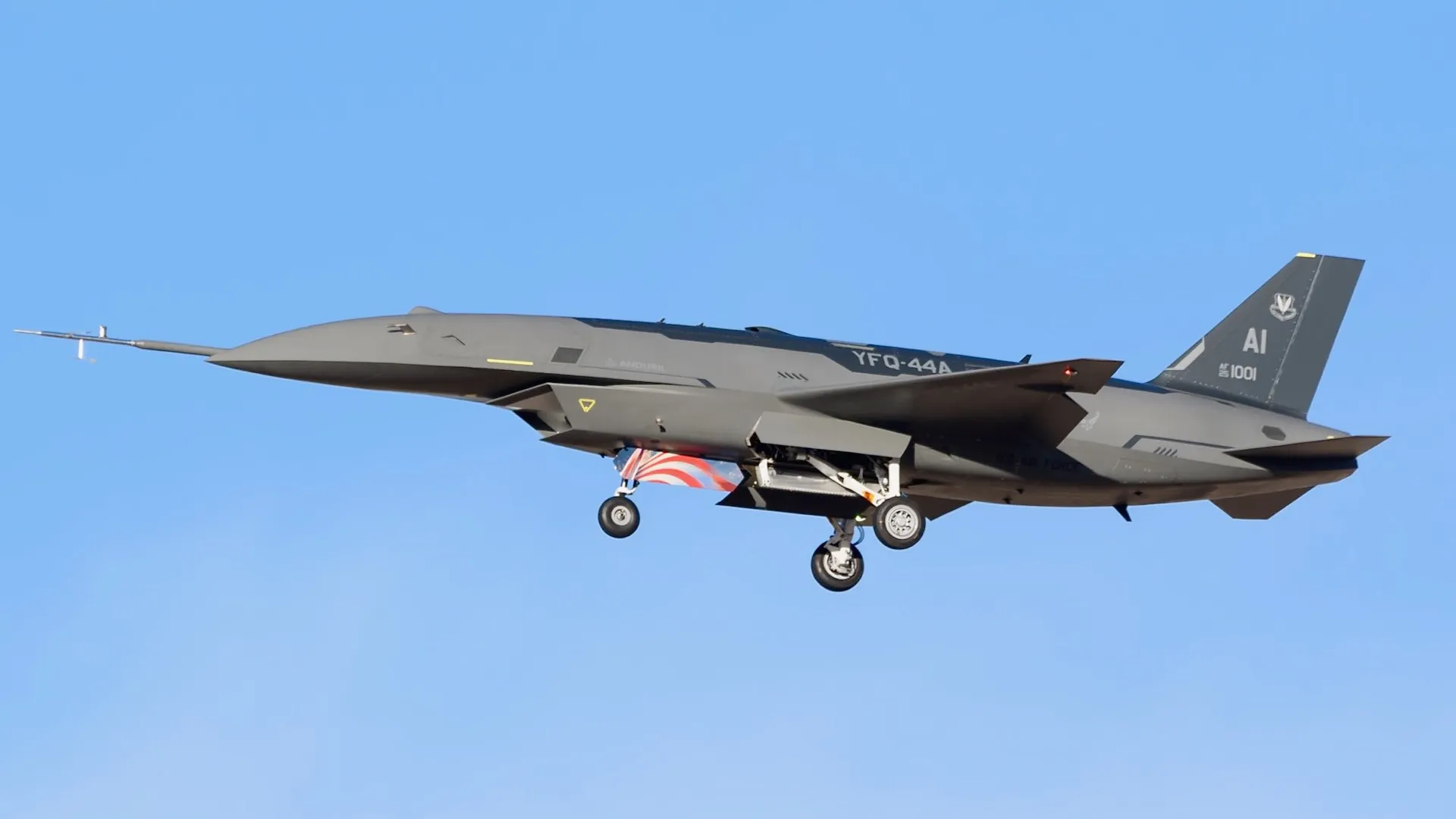
The US Air Force's FY27 budget request includes $996.5 million in procurement funding to begin production of Increment 1 Collaborative Combat Aircraft. It's the first time the program has procurement money in the base budget — and it's a useful real-time look at what crossing the second valley of death actually looks like.

The textbook case

When we wrote about the Stanford Gordian Knot Center's paper on defense tech's two valleys of death, the Collaborative Combat Aircraft (CCA) program fit the pattern almost exactly. CCA had cleared the first valley — prototype to production — years ago. General Atomics and Anduril both have flying production-representative test vehicles. The technology works. The operational concept works. The Air Force is enthusiastic.

What CCA didn't have was procurement money in the base budget. It was funded through research and development, through Other Transaction Authorities, through experimental units. Program-of-record status — being written into the Future Years Defense Program, having a budget line that survives administration changes — was the missing piece.

That's Valley Two. The gap isn't between making a thing and selling it. It's between selling it and being institutionalized into the long-term budget. Companies can be operationally deployed, praised, and renewed annually while remaining entirely outside the enduring force structure.

The FY27 request changes that for CCA. $996.5 million in procurement, $150 million in advance procurement for FY28, and roughly $1.37 billion in continued R&D — total program request around $2.37 billion. The largest single new addition to the Air Force's $30.64 billion aircraft procurement account. That's not a research line item. That's a program of record being built.

What changed

Three things moved CCA across the valley, and they're worth identifying because they're the same things that will move other programs across.

The unit cost came down. Col. Timothy Helfrich, the program's portfolio acquisition executive, said in late March that CCA is currently tracking below the original $30 million per-unit target. Cost discipline is what makes "affordable mass" plausible to programmers; if CCAs cost what crewed fighters cost, the entire operational concept collapses. Hitting cost targets is what unlocks budget conversations.

The operational case got concrete. Wargaming consistently shows favorable outcomes when manned fighters are paired with CCAs at ratios of 1:3 to 1:5, which translates into specific force-structure recommendations the Air Force can defend in front of Congress. Vague promises of capability don't displace legacy budget lines. Specific operational gains against specific Pacific scenarios do.

Allied co-procurement showed up. On April 23, the Netherlands became the first ally to commit funding for two Increment 1 CCAs. The aircraft will remain US property and operate with the Experimental Operations Unit at Nellis Air Force Base, with Dutch personnel embedded. That's a small commitment in dollar terms, but it's a significant signal — the program now has international demand, which strengthens the case that the production line stays open.

What it tells investors

Three implications worth noting for capital allocators thinking about defense tech.

The first is diagnostic. The CCA pattern — strong operational interest, demonstrated capability, OTA and experimental funding for years before procurement money arrives — is the pattern most growth-stage defense companies are running. Investors looking at a portfolio company can ask the same questions the Air Force eventually answered for CCA. Is unit cost on a credible path? Is the operational case sharp enough to displace legacy spending? Are allied buyers showing up? The Valley Two crossing is observable in advance.

The second is about the budget mechanics. Programs that move from R&D into procurement see a financial profile change for their contractors. R&D contracts are typically smaller, more numerous, and renewed annually. Procurement contracts are larger, multi-year, and structurally harder to cancel. For a defense tech company, the transition isn't just a revenue increase — it's a different kind of revenue, with different cost-of-capital implications. That matters for valuation.

The third is the allied dimension. The Netherlands commitment to CCA Increment 1 is a small early example of what we wrote about in the pillar piece — allied co-procurement as a structural feature of the new defense investment landscape, not a one-off. Programs that build allied buyers into their early procurement lots are going to look very different from programs that try to add international sales after the fact. CCA is the first major US program where that's visible in the budget request.

What's still uncertain

A few things worth flagging. Final FY27 quantities haven't been disclosed; analysts estimate around 30 airframes for the first procurement lot. Production decisions between General Atomics and Anduril are expected this summer. Congressional approval still has to happen — lawmakers have requested detailed briefings on mission sets, human-machine interfaces, production scaling, and integration plans, and FY27 markup will likely include oversight language.

But the structural moment has happened. CCA is now in procurement. The next questions are about scale, not whether the program survives.

For investors, that's the moment to start looking for the next CCAs. The pattern is observable. The diagnostic questions are clear. And the institutional architecture — at home and across allies — is increasingly built to accelerate the crossing rather than slow it down.


The US Air Force's FY27 budget request includes $996.5 million in procurement funding to begin production of Increment 1 Collaborative Combat Aircraft. It's the first time the program has procurement money in the base budget — and it's a useful real-time look at what crossing the second valley of death actually looks like.

The textbook case

When we wrote about the Stanford Gordian Knot Center's paper on defense tech's two valleys of death, the Collaborative Combat Aircraft (CCA) program fit the pattern almost exactly. CCA had cleared the first valley — prototype to production — years ago. General Atomics and Anduril both have flying production-representative test vehicles. The technology works. The operational concept works. The Air Force is enthusiastic.

What CCA didn't have was procurement money in the base budget. It was funded through research and development, through Other Transaction Authorities, through experimental units. Program-of-record status — being written into the Future Years Defense Program, having a budget line that survives administration changes — was the missing piece.

That's Valley Two. The gap isn't between making a thing and selling it. It's between selling it and being institutionalized into the long-term budget. Companies can be operationally deployed, praised, and renewed annually while remaining entirely outside the enduring force structure.

The FY27 request changes that for CCA. $996.5 million in procurement, $150 million in advance procurement for FY28, and roughly $1.37 billion in continued R&D — total program request around $2.37 billion. The largest single new addition to the Air Force's $30.64 billion aircraft procurement account. That's not a research line item. That's a program of record being built.

What changed

Three things moved CCA across the valley, and they're worth identifying because they're the same things that will move other programs across.

The unit cost came down. Col. Timothy Helfrich, the program's portfolio acquisition executive, said in late March that CCA is currently tracking below the original $30 million per-unit target. Cost discipline is what makes "affordable mass" plausible to programmers; if CCAs cost what crewed fighters cost, the entire operational concept collapses. Hitting cost targets is what unlocks budget conversations.

The operational case got concrete. Wargaming consistently shows favorable outcomes when manned fighters are paired with CCAs at ratios of 1:3 to 1:5, which translates into specific force-structure recommendations the Air Force can defend in front of Congress. Vague promises of capability don't displace legacy budget lines. Specific operational gains against specific Pacific scenarios do.

Allied co-procurement showed up. On April 23, the Netherlands became the first ally to commit funding for two Increment 1 CCAs. The aircraft will remain US property and operate with the Experimental Operations Unit at Nellis Air Force Base, with Dutch personnel embedded. That's a small commitment in dollar terms, but it's a significant signal — the program now has international demand, which strengthens the case that the production line stays open.

What it tells investors

Three implications worth noting for capital allocators thinking about defense tech.

The first is diagnostic. The CCA pattern — strong operational interest, demonstrated capability, OTA and experimental funding for years before procurement money arrives — is the pattern most growth-stage defense companies are running. Investors looking at a portfolio company can ask the same questions the Air Force eventually answered for CCA. Is unit cost on a credible path? Is the operational case sharp enough to displace legacy spending? Are allied buyers showing up? The Valley Two crossing is observable in advance.

The second is about the budget mechanics. Programs that move from R&D into procurement see a financial profile change for their contractors. R&D contracts are typically smaller, more numerous, and renewed annually. Procurement contracts are larger, multi-year, and structurally harder to cancel. For a defense tech company, the transition isn't just a revenue increase — it's a different kind of revenue, with different cost-of-capital implications. That matters for valuation.

The third is the allied dimension. The Netherlands commitment to CCA Increment 1 is a small early example of what we wrote about in the pillar piece — allied co-procurement as a structural feature of the new defense investment landscape, not a one-off. Programs that build allied buyers into their early procurement lots are going to look very different from programs that try to add international sales after the fact. CCA is the first major US program where that's visible in the budget request.

What's still uncertain

A few things worth flagging. Final FY27 quantities haven't been disclosed; analysts estimate around 30 airframes for the first procurement lot. Production decisions between General Atomics and Anduril are expected this summer. Congressional approval still has to happen — lawmakers have requested detailed briefings on mission sets, human-machine interfaces, production scaling, and integration plans, and FY27 markup will likely include oversight language.

But the structural moment has happened. CCA is now in procurement. The next questions are about scale, not whether the program survives.

For investors, that's the moment to start looking for the next CCAs. The pattern is observable. The diagnostic questions are clear. And the institutional architecture — at home and across allies — is increasingly built to accelerate the crossing rather than slow it down.

Let’s bring your vision to life

Extreme close-up black and white photograph of a human eye

Contact us

Let’s bring your vision to life

Extreme close-up black and white photograph of a human eye

Contact us

Let’s bring your vision to life

Extreme close-up black and white photograph of a human eye

Contact us